
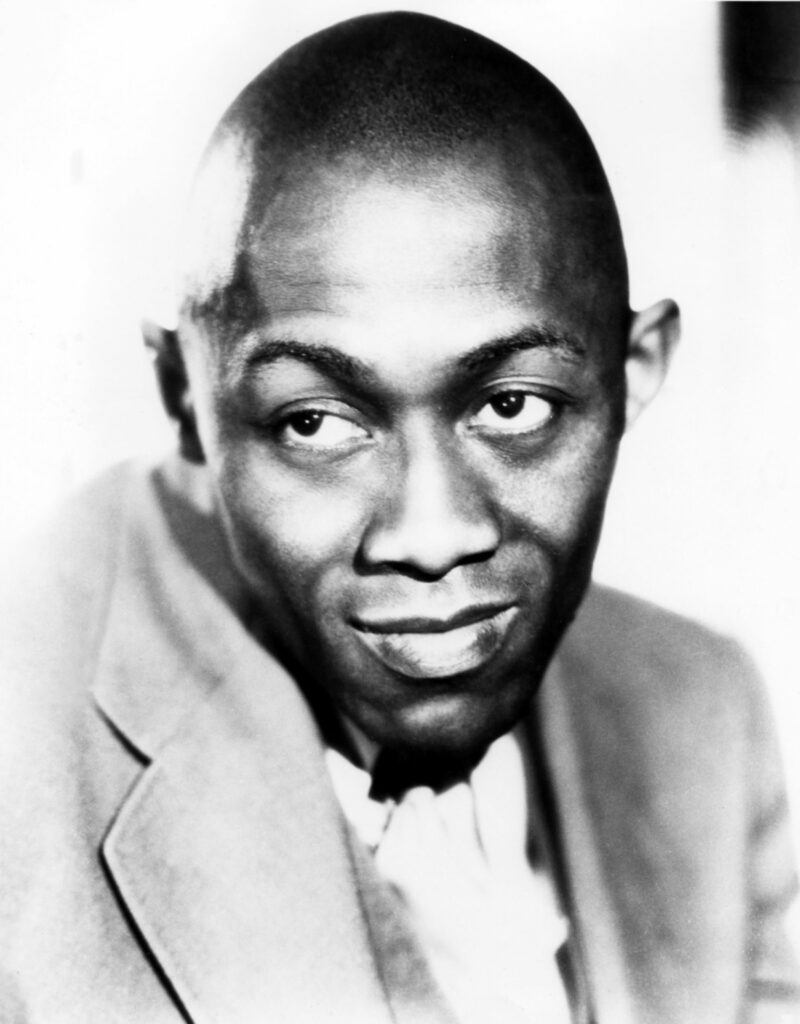
He invented the slow-moving, slow-witted, shiftless Stepin Fetchit, and the only person I ever talked with who had actually met actor Lincoln Perry was actress Marsha Hunt. They worked together in her first film (his 37th), The Virginia Judge, and she reported that they would quietly hang out together in downtime on the set. That was in 1935. She remarked, “Years later, when the term ‘black’ was coined as a word for dignity, the people who were interested in those civil rights cursed Stepin Fetchin as the Uncle Tom emblem. And I was so hurt for him because he was simply a very gifted comedian.” Hunt was a lovely, brave humanitarian; an artist; and a highly intelligent person. And Stepin Fetchit was, indeed, a gifted comedian. But there was nothing simple about it.
A video posted on YouTube in March 2023 shows Perry, in full Stepin Fetchit mode, explaining how “The Laziest Man in the World” epithet that the entertainment industtry famously attached to him came to be. He drawls on, in dialectic speech, about a long, mythical pursuit of finding a job that required no work. Finally, his quest culminates in, “…I just kep’ on and kep’ on and wouldn’t give up and one day I seen some men makin’ some movin’ pictures and I said, ‘Mister, you wants a man to do nothin’?’ and so they said, ‘yes’ and I been workin’ ever since.”
Step, and fetch it! Sounds like a brutal, disrespectful directive of someone in a superior position to someone in a subservient one. The implications of contracting the phrase into a name are glaring. One of Lincoln Theodore Monroe Andrew Perry’s accounts of how he chose his professional moniker is that one day, in his early vaudevillian career, he won money on a racehorse named “Step and Fetch It”. That may or may not be true. According to the African American Registry, Perry did have a comedy partner, Ed Lee, and they had an act titled “Step ‘n Fetchit: Two Dancing Fools from Dixie.” So, Perry may well have copped the name when he became a solo act. As to the racehorse part of the story…who knows? In his book Stepin Fetchit: The Life and Times of Lincoln Perry (2005), historian Mel Watkins commented on how Fetchit trolled the media: “He misled interviewers with fanciful anecdotes about his past, distorting and reshaping facts about his childhood as well as other aspects of his personal life in nearly all comments to the press and, until his last years, bedeviled any attempt to expose the real person behind his carefully concocted public persona.”
Despite that, many have written about Stepin Fetchit.
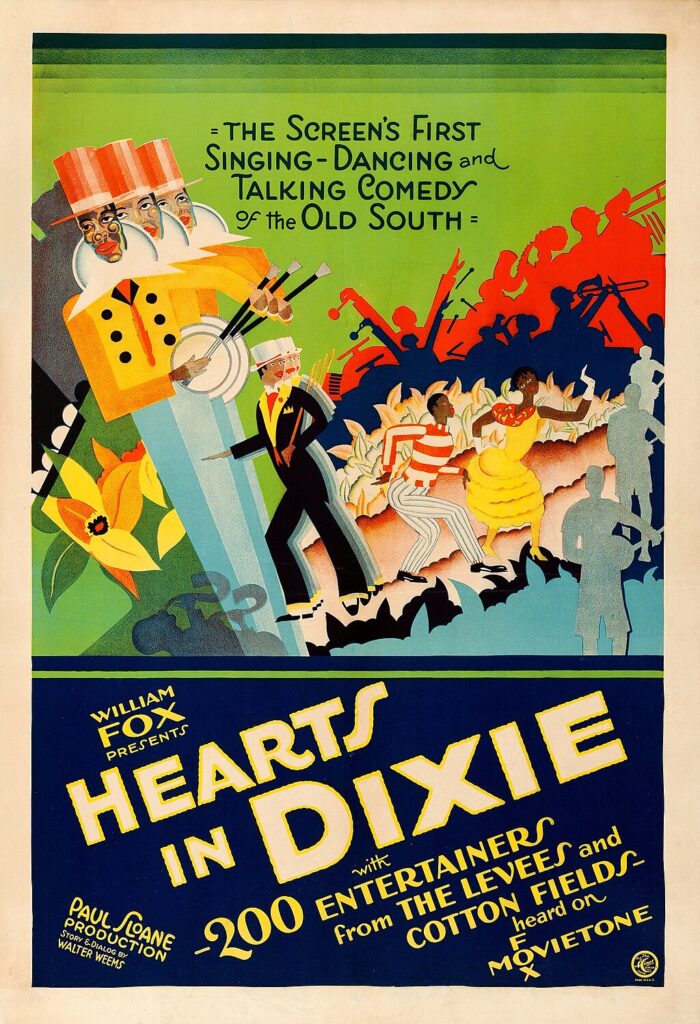
It is well documented that he was the first black actor to earn $1 million dollars. He made his first film in Hollywood in 1925 and reached top-billing and stardom by his eighth in the nearly all black cast of Hearts in Dixie in 1929. Though he has a star on Vine Street in the Hollywood Walk of Fame, for most of his career Fetchit played supporting roles. He had legal battles with the Hollywood hierarchy over equal pay with white supporting actors and, despite his loss of those battles, he managed a splashy, extravagant, attention-grabbing lifestyle until he declared bankruptcy in 1947. His prolonged financial miseries were due, in part, to Hollywood’s not knowing what to do with him when the “Laziest Man in the World” personae he had constructed fell into harsh disfavor.
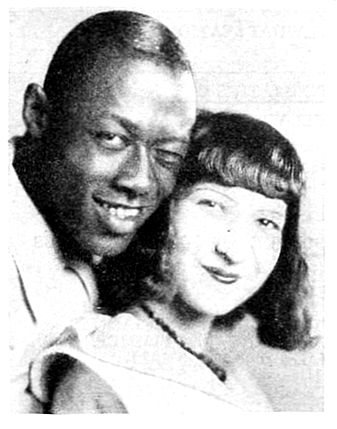
His personal life was messy, no matter what version of accounts you believe. It is reported by some that he married three times (some say that only 2 were legal unions) and had two sons. Both the first and the second spouse—Dorothy Stevenson and Winifred Johnson—claimed in court that he physically abused them, Stevenson saying he beat her severely with his fists and a broomstick and Johnson alleging that he shoved her down a flight of stairs, breaking her nose. These acts would be unimaginable if attributed to the totally nonthreatening Stepin Fetchit character, and whereas his co-cast member, Marsha Hunt, described him as “endearing,” and “a sweet man,” the first two wives apparently experienced a different facet of him. The courts ruled in their favor. The third marriage was to Bernice Sims in 1951 and though they separated a few years later, they remained married until her passing in 1985 with Perry following her in death less than a year later at the age of 83.
Jemajo Joseph Perry, Fetchit’s son with first wife Dorothy, went on to live a long and peaceful life during which, according to his obituary, he enjoyed classical music, played the marimba and violin, and was, “a man of deep faith and gentle strength.” He passed away in 2025; he was 95 years old. By contrast, the son from the second union, Donald Lambright (who took his stepfather’s surname), was the focus of an extreme tragedy in 1969. He went on a shooting spree on the Pennsylvania Turnpike, injured 15 people, and killed 5, including his wife and himself. Lincoln Perry told the Los Angeles Times that he had reason to believe the “murder-suicide” was set up by the FBI because of his son’s involvement with the Black Power movement. This horrific incident followed closely behind Perry’s unsuccessful attempt to prevail in a lawsuit against CBS for defamation of character after CBS’s documentary, Black History: Lost, Stolen or Strayed, singled out Stepin Fetchit for condemnation as a damaging representation of blacks.
Two life stories of Perry came out within a month of each other in 2005, and, according to the Watkins biography, Perry had dreamed of writing his autobiography or of producing his own documentary of his life. Shuffling to Ignominy: The Tragedy of Stepin Fetchit is the account penned by former People magazine writer Champ Clark. In the preface, Clark submits that the very name, Stepin Fetchit, has become a phrase. They are, “words that are part of our language, two words used to convey the ultimate in negative racial stereotype.” He labels the reference “smug and glib,” particularly when thrown around by white speakers or writers.
Perry’s shuffling “Laziest Man in the World” personae can easily be regarded as an insulting racial archetype of stupidity and ineptitude. Or (as Watkins
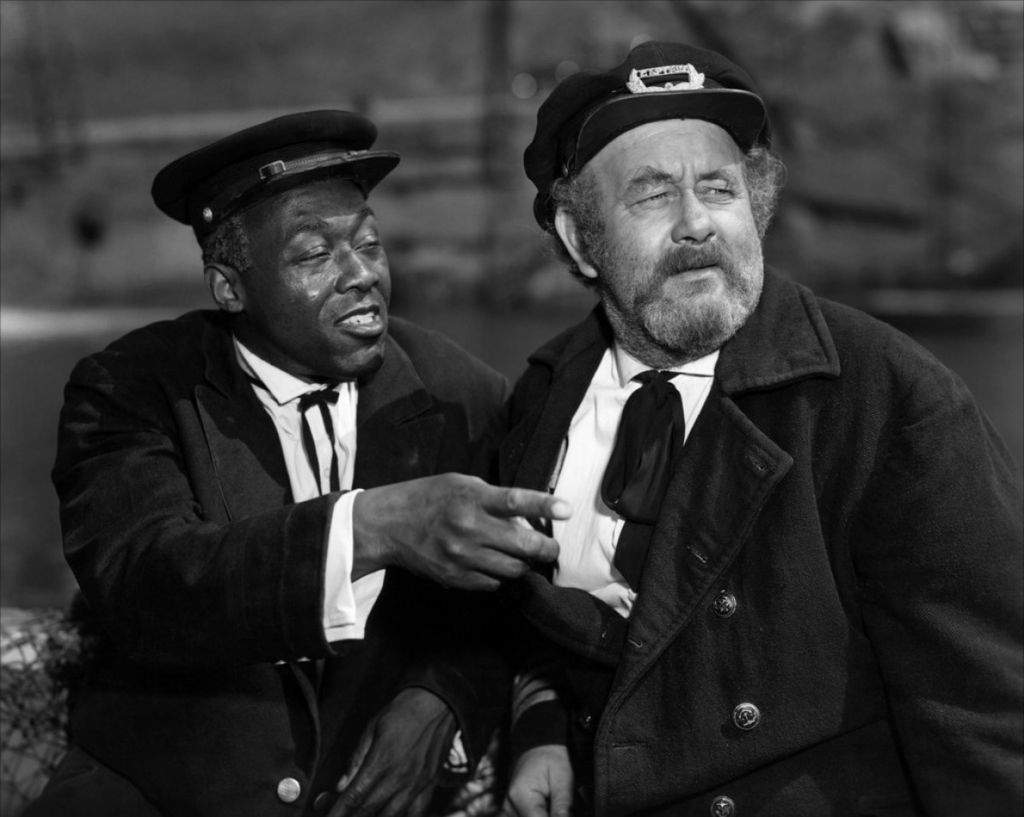
puts forward in his Perry biography), a trickster, putting one over on the white ruling class. And/or—as I have always found the characterization to be—a wacky, laidback, unique individual with an off-center view of his relationship with the world.
No matter what the perception, I believe that Marsha Hunt’s description of a Stepin Fetchit scene in Virginia Judge challenges anything positive. “One of the scenes,” Hunt began, “was a county fair with the fairgrounds, and the concessions, and the Ferris Wheel, and… all that, and one of [the midway games] was to throw baseballs to try to hit a target. And the target was Stepn Fetchit’s head.” Here she paused, and put an emphasis on her words, “And that made me so unhappy. Because how could they treat another human being as a target?” She ended her tale with, “It got laughs.”
The “target” has a quote shown on his page on the IMDb. Perry explains, “Like Charles Chaplin, I played the part of a simple, sincere, honest and lovable character who won sympathy from an audience by being tolerant of those who hurt him, so that he could be good to those he loved.”
What do you think?
~FW
One Response
Black actors, throughout the history of Cinema, could hope to find any on-screen work at all. Like most screen actors, the job involved playing the parts that were given to you, and most actors, of any color or ethnicity, got pigeonholed into playing a certain type of character for which the studio leaders had decided they were best suited. In a very racially insensitive world, black actors, such as Hattie McDaniel, Butterfly McQueen, and may others were forced to portray people who conformed to white stereotypical notions “African Americans”, sadly, often played with a mockingly humorous approach. It is too bad, when making a living, and doing it well, they were later derided for the way their work came to be viewed when times and attitudes changed. Watch Hattie McDaniel in her Oscar winning role in “Gone with the Wind”, and you’ll see a consummate actor authentically accomplishing lightning fast emotional shifts and transitions so amazingly that audiences never noticed how supernaturally frenetic they were.